
To spar safely, wear the right protective gear, agree with your partner on how fast and how hard you’ll go, and start slow. Stop or ease off the moment something hurts, and follow your instructor’s rules every time.
Sparring is controlled practice fighting with a partner. It’s the best way to test what you’ve learned, and it’s safe when everyone follows the same rules.
Wear the right gear
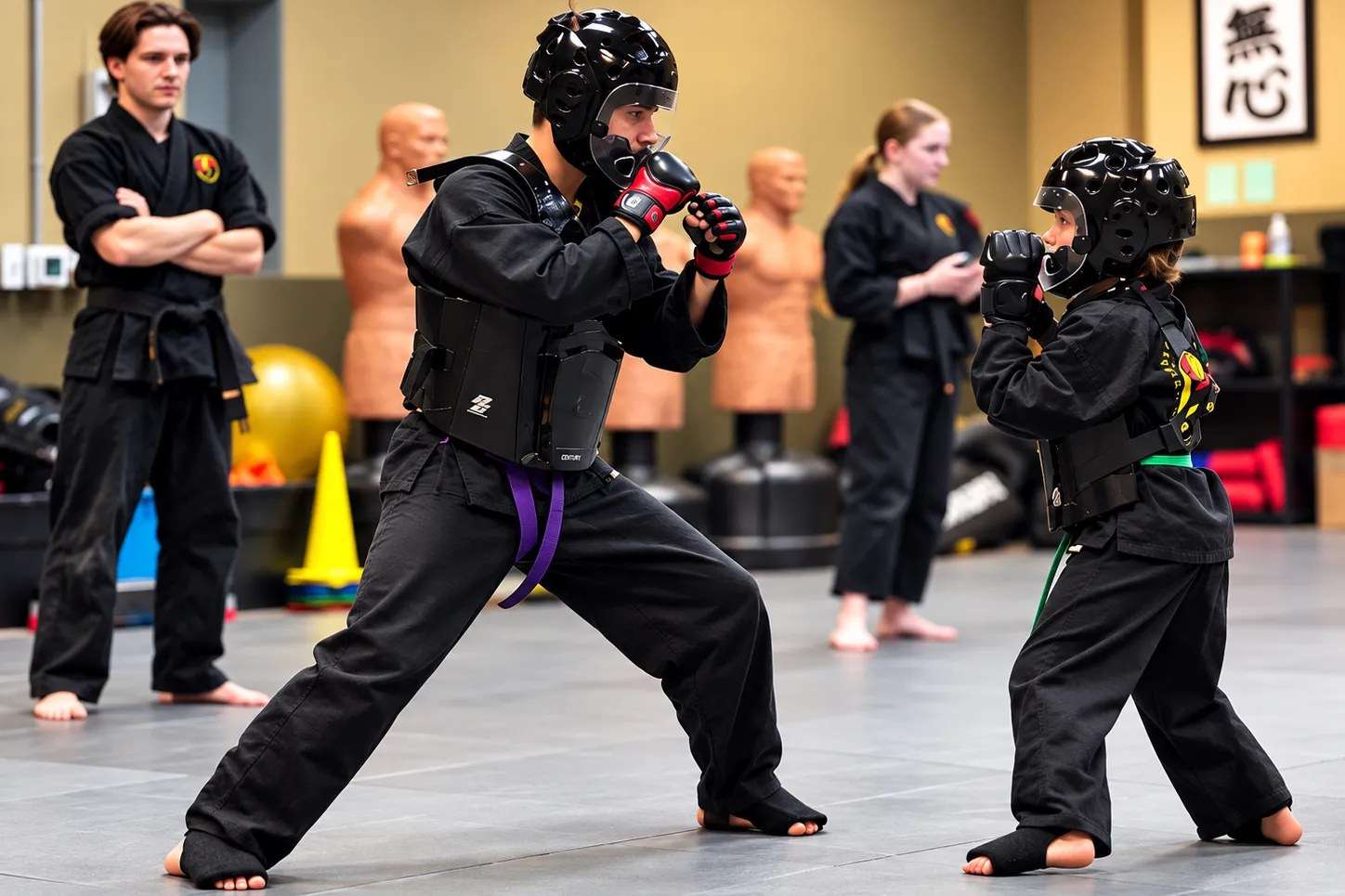
Most sparring needs a mouthguard, headgear, gloves and shin guards, plus a groin protector for men and boys. Gear only works if it fits. Check that nothing slips when you move, and replace pads that are torn or flat.
Talk with your partner first
Before you start, agree on speed, how much contact is OK and which targets are off limits. If your partner is newer or smaller than you, match their level. During the round, speak up if a technique hurts or you need to stop. A good partner will listen.
Start slow
If you’re new to sparring or with a new partner, begin at half speed with simple techniques. Speed up only when you’re both comfortable. Ask your partner to slow down if you feel overwhelmed.
Stay focused
Keep your eyes on your partner and know where the other pairs are on the mat. Don’t chat or turn away mid-round. Accidents happen when someone isn’t paying attention.
Know when to rest
Sparring is tiring. When you’re worn out, your hands drop and your technique gets sloppy, and that’s when people get hit hard. Take a break when you need one, and tell your instructor if you’re hurt.
Follow the rules and respect your partner
Every class has sparring rules. Learn them before you step in and follow them every round. Your job is to help your partner get better, and theirs is to help you. Hitting harder than you agreed to breaks that deal.
How sparring works at IMAA
We never put you or your child into sparring before you’re ready. Kids in Beginner Kenpo Karate practice on pads in their first year and start sparring in their second year, with protective gear.
Aikido students don’t free spar. They practice set techniques with a cooperative partner and add speed and resistance as they improve.
We don’t train for tournaments. Sparring here is practice for staying calm and using good technique under pressure. Keeping your control when a round heats up is an emotional tool as much as a physical one, and our instructors watch every pair so it stays controlled.
Teens and adults can learn more about our adult martial arts classes, including Kali for ages 13 and up and Aikido for 16 and up.