
Aikido is a Japanese martial art that uses balance, leverage and an attacker’s own momentum to throw or pin them. It was developed by Morihei Ueshiba in the late 1920s and 1930s, with the goal of ending a fight while causing as little harm as possible.
At Innovative Martial Arts Academy, Aikido is one of the arts I teach. Here’s what the name means, where the art came from and what you’ll do in a class.
What does the word Aikido mean?
The name has three parts:
- Ai means join or harmony.
- Ki means spirit or energy.
- Do means the way.
Put together, it’s often translated as “the way of harmony with energy.” In practice, that means you move with an attack and steer it where you want it to go.
How does Aikido work?
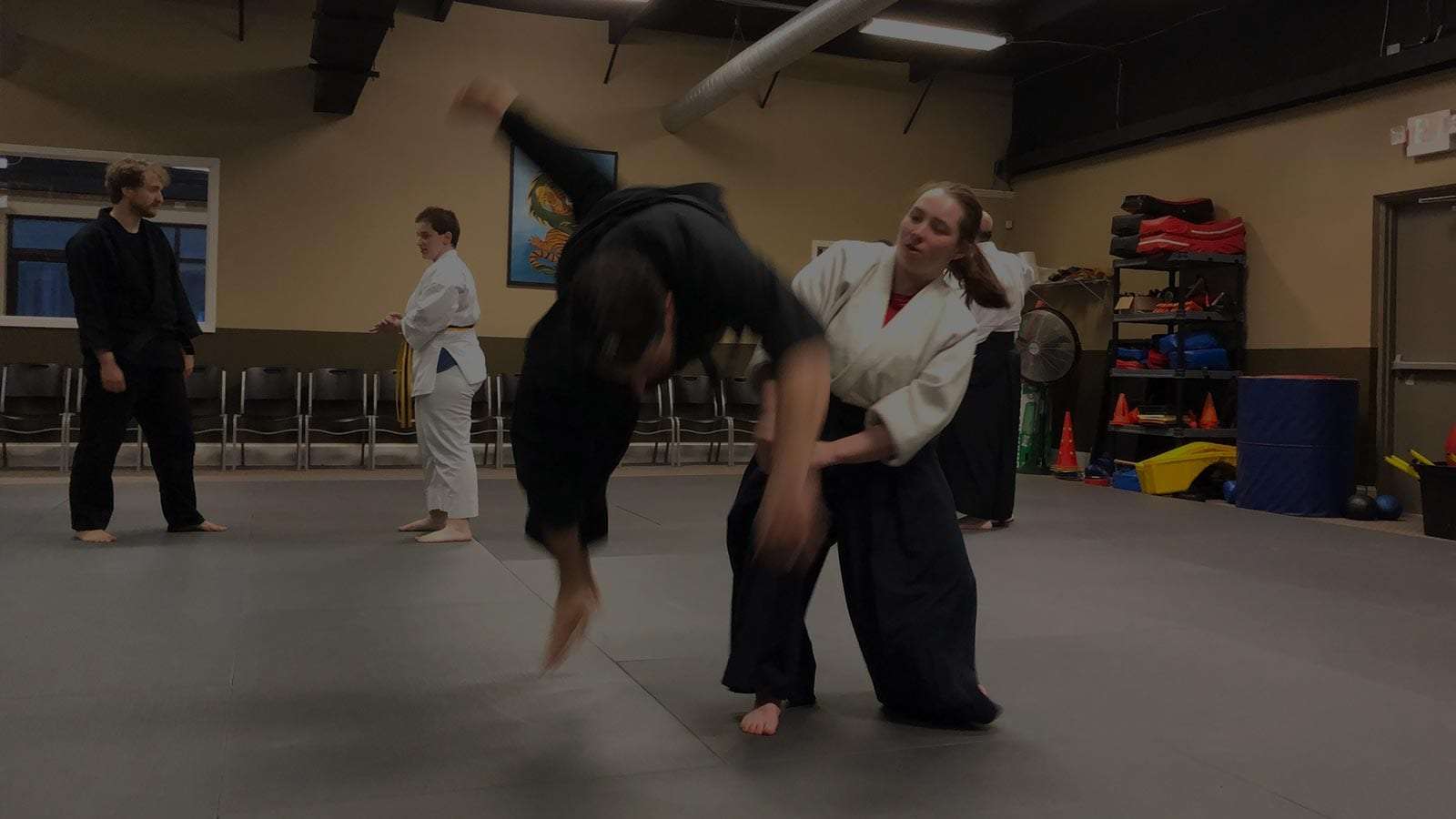
When someone grabs or strikes at you, you step off the line of the attack, take their balance and then use a throw or a joint lock to control them. Because the technique does the work, a smaller person can control a bigger one with good timing and practice.
Most Aikido is non-competitive, so there are no matches to win on the way up in rank. You practice set techniques with a partner, taking turns as attacker and defender, and you both get better together.
What is the purpose of Aikido?
Aikido has two main goals:
- Settle conflict peacefully, with as little harm as possible.
- Improve yourself through training.
A lot of Aikido practice is about working on your own fear, temper and bad habits. The throws and locks train your body, and that inner work gives you emotional tools you can use outside the dojo.
Where did Aikido come from?
Morihei Ueshiba was born in Japan in 1883. He studied several older martial arts, and in the late 1920s and 1930s he began building Aikido from them. The name Aikido became official in 1942.
Ueshiba’s early style was harder, with more strikes and more weapons work. As he got older, his Aikido grew softer and more flowing. Students who trained with him at different times in his life learned somewhat different versions, and that’s one reason you’ll see Aikido schools vary today. After World War II, his students took Aikido to other countries, including the United States. Ueshiba died in 1969.
What does an Aikido class at IMAA look like?
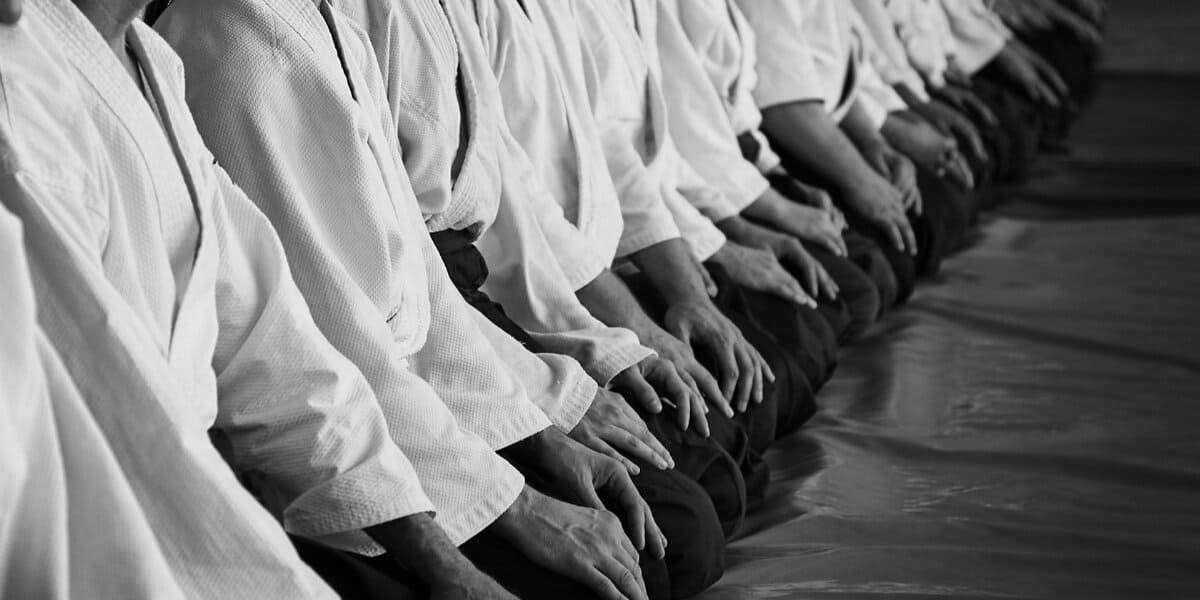
We start new students slowly, and falling safely comes before anything else. At the end of class, everyone bows and thanks their partners and the instructor.
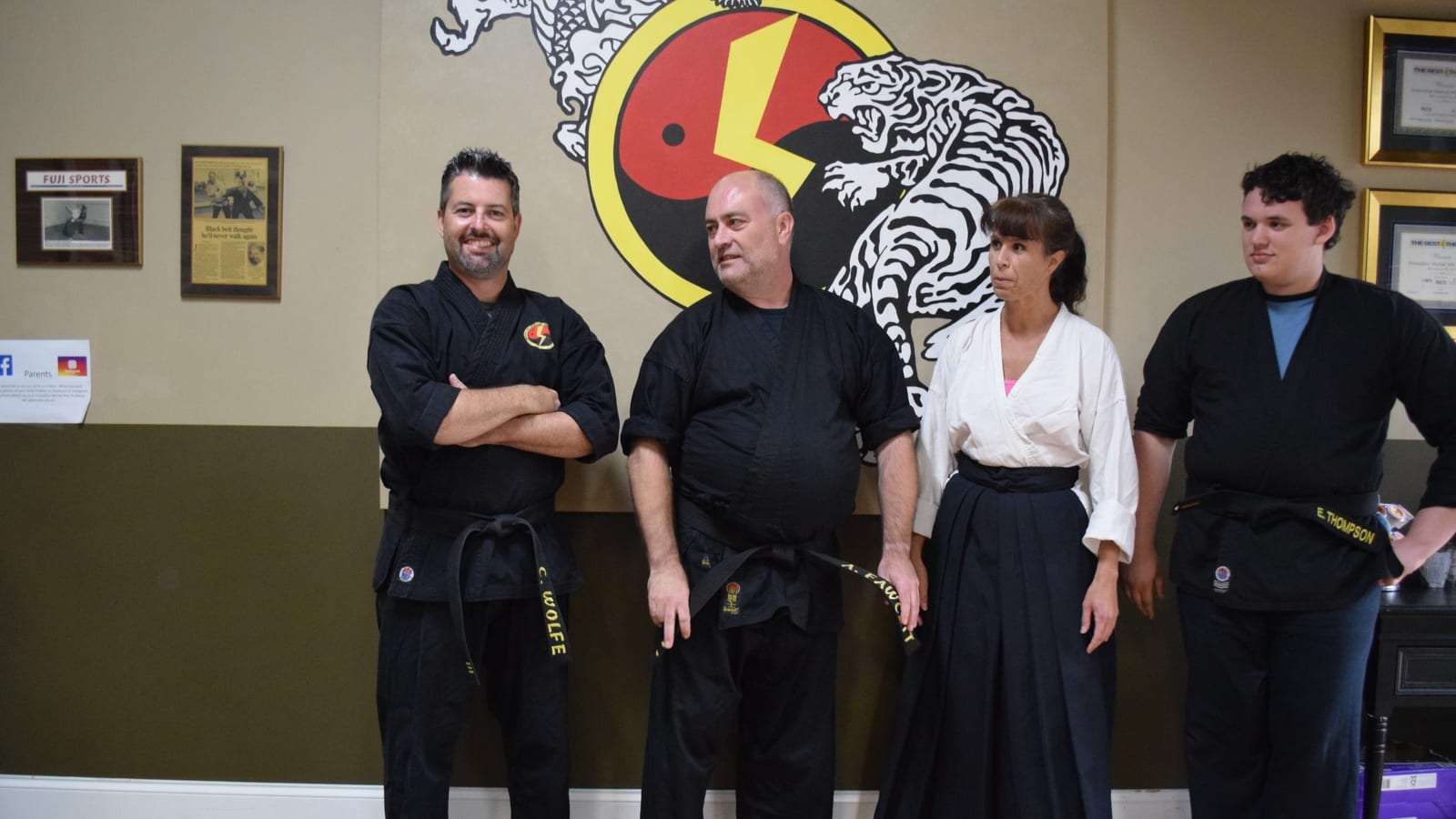
I lead the Aikido team. Classes are for adults and teens 16 and up and meet Tuesday and Thursday at 7:15 PM.
A few Aikido terms to learn first
We use Japanese terms in class, and knowing a few before your first class helps you follow along.
| Japanese | English |
|---|---|
| Katate | Wrist |
| Kata | Shoulder |
| Katatetori | Wrist grab |
| Katatori | Shoulder grab |
| Shomenuchi | Overhand attack |
| Yokomenuchi | Diagonal strike |
The full study guide, with counting from one to ten and more body and attack terms, is on our Aikido classes page. If you’ve heard that Aikido doesn’t work in a real fight, read Aikido myths, answered.
You don’t need any experience to start, and you’ll feel welcomed from day one.